2026 Begins With a Promise: Finding Hailey Athay and the Crisis of Missing Indigenous Lives
I am kicking off 2026 with renewed determination to bring light to one of the most urgent and overlooked human rights crises in America: the epidemic of missing and murdered Indigenous people.
This is not an abstract issue.
It is the lived reality of families who wake up every day without answers — including the family of Hailey Athay.
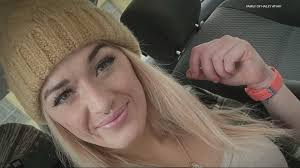
Hailey E. Athay vanished in December 2024 in Kelso, Washington.
She did not leave a note.
She did not announce a plan.
She did not return.
According to the Cowlitz County Sheriff’s Office, Hailey was last reported seen on December 20, 2024, at a South Kelso store and the Lexington Chevron. After that, she seemingly disappeared.
Hailey is described as 5 feet 7 inches tall, approximately 135 pounds, with brown hair and green eyes. Her case is officially listed as A25-247.
For her family, time has not softened the fear — it has sharpened it.
Her mother, Nicole Brooks, has been searching for answers for more than a year. During the course of that search, she was seriously injured, breaking both her arm and her leg. Even now, she continues to attend gatherings, speak publicly, and push for awareness using a cane.
“We just keep hoping and praying somebody out there decides to come forward and bring her home,” Brooks said.
Hailey’s friend Shasta Ives has refused to let the case fade. She has organized search parties in Rose Valley and Toutle, distributing flyers, coordinating volunteers, and walking the same ground again and again — not because the answers are easy, but because Hailey’s life matters.
“It’s been about nine months since I last saw her,” Ives said. “I’m still going to keep being her voice. She deserves justice.”
According to investigators, all known individuals of interest have been interviewed. Still, there have been no confirmed updates in Hailey’s disappearance. Names have not been released. No charges have been filed. The agency continues to ask the public for help.
Anyone with information regarding Hailey Athay’s whereabouts is urged to contact Detective James Hanberry with the Cowlitz County Sheriff’s Office at 360-577-3092, referencing Case A25-247.
Hailey’s case is not unique.
It is one of more than 150 Indigenous people currently listed as missing in Washington State alone.
According to the Washington State Patrol Missing Indigenous Persons Report (as of December 17, 2025), Hailey is one of dozens of men, women, and children whose lives are suspended in uncertainty — including Brandon Adams, Nicasio Agustin, Sierra Anderson, Nevaeh Beach, Douglas Becker, Karoline Billy, Dale Blevans, Jesi Blok, Logan Boatsman, Matthew Boyd, Brandon Brown, Kassidy Buchanan, Reggie Burdeau, Saul Burgess, Casey Burke, Chance Carson, Logan Castro, Edith Claver, Andrew Claw, Boyd Colegrove, Kelsey Collins, Charlie Cortez, Willard Crazymule, Elias Culps, Teresa Davis, Matthew Dean, Joseph Deluca, Martin Ellefson, Randy Fornsby… and the list continues through Marley Zimmerman
12.17.2025-Public-MIP-List
They are not statistics.
They are mothers.
Fathers.
Sons.
Daughters.
Friends.
Advocates and researchers have long warned that Indigenous people are disproportionately affected by violence, exploitation, and disappearance. In Washington State, Indigenous people make up roughly 2% of the population, yet account for 5% of unsolved missing persons cases. The state ranks second highest in the nation for missing and murdered Indigenous women.
Experts point to intersecting causes: historical trauma from colonization, forced displacement, poverty, homelessness, over-representation in foster care and incarceration systems, jurisdictional confusion between tribal, state, and federal authorities, and systemic under-reporting of cases.
Many cases are never properly documented. Of the 5,712 missing Indigenous women and girls reported to the National Crime Information Center in 2016, only 116 were logged in the U.S. Department of Justice’s missing persons database. The rest effectively vanished from the system.
That gap between reporting and recordkeeping is where families are often left to fight alone.
The Cowlitz Indian Tribe has been working to recover the stories of missing and murdered Indigenous people whose tribal affiliation was often never recorded. At their office in Hazel Dell, a memorial honors eight people affiliated with the tribe — one missing, seven murdered.
“We started asking ourselves, ‘Where are they from?’” said Debbie Hassler, the tribe’s deputy director of health and human services. “There’s all this data, but it doesn’t tell us who they were.”
The tribe’s Pathways to Healing program supports families impacted by domestic violence, sexual assault, trafficking, and elder abuse. When they began asking members if they had loved ones who were missing or murdered, the response was overwhelming.
Some names were removed after decades when people were finally found.
Others remain — including Misty Copsey, missing since 1992.
Misty was 14 years old.
She was last seen walking home near Tacoma after missing the last bus from the Puyallup fairgrounds. Her case remains unsolved. Her mother died in 2020 without ever knowing what happened to her daughter.
Families across Washington describe the same nightmare: being sent from local police to county, from county to state, from state to federal, from federal back again — while months turn into years.
Recognizing this failure, Washington launched the nation’s first Indigenous Peoples Alert System in 2021. In 2023 alone, 51 alerts were issued. Five people remain missing. Two were found deceased. The rest were located.
That same year, lawmakers established the country’s first Indigenous Persons Cold Case Unit within the Attorney General’s Office, designed to assist tribal, state, county, and federal agencies in solving long-ignored cases.
These are meaningful steps.
But for families like Hailey Athay’s, progress on paper does not replace answers in real life.
2026 must be different.
It must be the year we stop letting these cases drift into silence.
The year we say these lives are not expendable.
The year we refuse to accept that “missing” is an ending.
Hailey Athay deserves to be found.
Every name on this list deserves resolution.
Every family deserves truth.
If you know something — say something.
If you can share — share.
If you can show up — show up.
Because the only thing more dangerous than being missing…
…is being forgotten.