Cassandra Lee Boskofsky: The Unfinished Case
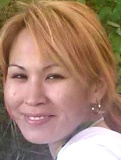
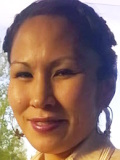
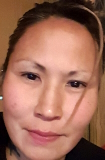
Cassandra Lee Boskofsky should not be known to the public because of photographs found on a convicted killer’s phone. She should be known because she laughed loudly, because she stayed in contact with her family even when her life was unstable, because she carried seven children in her body and loved them in the complicated, imperfect way that human beings love when they are fighting their own battles. Instead, she is known through three images recovered during the arrest of Brian Steven Smith — images that her family believes show her lying bloodied on the ground — and through a legal proceeding that declared her dead without ever returning her remains home.
Cassandra was thirty-eight years old when she vanished in Anchorage in the summer of 2019. She was Alaska Native. She stood just four feet eleven inches tall and weighed around 120 pounds. She had brown hair, brown eyes, pierced ears, scars on both knees, and a faded blue-and-black butterfly tattoo on her neck. She sometimes used the last name Boskofsky-Beaver. She struggled at times with alcohol and unstable housing, but those facts, often emphasized in public summaries, do not define her. What defines her is that she always kept in touch with her family and with the adoptive and foster parents of her children. No matter what was unraveling in her life, she did not simply disappear from the people she loved.
Her last known contact with law enforcement occurred on August 7, 2019, in Anchorage. After that, silence.
That silence would later collide with something horrifying. When Smith was arrested in October 2019 for the murders of Kathleen Jo Henry and Veronica R. Abouchuk, investigators recovered digital evidence from his devices, including photographs of additional women who appeared beaten or unconscious. Among those were three images of a woman lying on the ground, blood visible, her body positioned in a way that suggested violence rather than rest. When asked about the photos, Smith reportedly told investigators that he had picked up a woman who passed out and that he left her alive outside. Law enforcement did not publicly charge him in connection with those images. The woman in the photographs was not formally identified at that time.
Cassandra’s family saw the images. They recognized the butterfly tattoo on her neck.
Imagine what that moment must have been like — not to be notified through an official identification process, not to receive a solemn call from investigators confirming forensic matches, but to see a public release of photographs and realize that the body depicted belonged to someone you loved. That recognition did not come with the dignity of confirmation. It came with the weight of having to convince institutions that what they were seeing was real.
The Anchorage Police Department has stated that there remains an open and ongoing investigation into the unidentified woman in those photographs. Prosecutors have not formally accused Smith of killing Cassandra. The legal threshold for criminal charges is high and appropriately so. But there is another threshold that must be discussed — the threshold of urgency when Indigenous women disappear, the threshold of investigative intensity when victims are experiencing instability, and the threshold of public pressure required before cases move forward with visible momentum.
In September 2024, Cassandra’s cousin, Marcella Boskofsky-Grounds, petitioned the court for a presumptive death hearing. These hearings are often used in circumstances where survival is no longer reasonably possible — plane crashes, boat sinkings, extreme terrain disappearances — or in cases where years have passed without contact. Cassandra’s family presented evidence, including the photographs recovered from Smith’s devices. After deliberating for approximately forty-five minutes, a six-person Anchorage jury unanimously declared Cassandra dead and the victim of homicide. That ruling allowed a death certificate to be issued.
A death certificate is a piece of paper. It is not a body. It is not a burial. It is not a prosecution.
The jury’s declaration acknowledged what her family had long believed, but it did not answer the most fundamental questions: Where is Cassandra? What happened in the hours between her last known contact and the moment those photographs were taken? Who, if anyone, will be held criminally accountable for her death?
When Smith was convicted in 2024 and sentenced to 226 years in prison for the murders of Henry and Abouchuk, the courtroom filled with individuals wearing red handprints across their faces, a symbol of the crisis of Missing and Murdered Indigenous Women. The brutality inflicted upon those two women rightly captured national headlines. Their names are now recognized across the country, and their cases were prosecuted with the full weight of available digital evidence. Cassandra’s name, however, remains tethered to uncertainty.
It is important to state clearly that law enforcement has not publicly confirmed that Cassandra is the woman depicted in those photographs. It is equally important to state that her family, after reviewing the images and presenting evidence in court, is certain. The tension between those two realities defines the unfinished nature of this case. The legal system demands forensic proof. Families live with recognition that transcends laboratory thresholds.
Cassandra’s story exists within a broader crisis that predates her disappearance. Alaska Native women experience disproportionately high rates of violence. The concept of the “less dead” — the devastating idea that certain victims receive less urgency because of poverty, addiction, or marginalization — has long haunted Indigenous communities. When victims are described first by their vulnerabilities rather than their humanity, public empathy narrows. Investigative timelines stretch. Cases cool more quickly. This is not an accusation directed at a single department or investigator; it is a systemic pattern documented across jurisdictions.
Cassandra was more than her struggles. She was more than a missing person bulletin. She was more than an evidentiary debate about photographs. She was a mother. She was a daughter. She was a cousin. She was a woman who kept in touch, who did not abandon her children even when she could not raise them herself, who remained connected to the people who loved her. Her disappearance is not an abstract tragedy; it is a rupture in a family that continues to wait.
National documentaries such as The Lost Women of Alaska have expanded awareness of Smith’s crimes and the possibility of additional victims. That exposure has value, but it must not become a substitute for resolution. Cassandra’s case cannot be allowed to dissolve into the background as the public moves on to the next series, the next headline, the next shocking narrative. Her family does not have the luxury of moving on. They do not have remains to bury. They do not have a gravesite to visit. They have a jury’s declaration and an ongoing investigation.
The unanswered questions matter. If Smith claimed he left the woman alive, what corroboration exists to test that statement? Were cell phone records, vehicle data, geographic markers, or DNA evidence from his truck fully analyzed and publicly addressed? If evidence remains under review, what timeline governs that review? Transparency does not compromise investigations when handled responsibly; it strengthens public trust.
Cassandra’s cousin described the presumptive death ruling as a meaningful step but only the beginning. The family continues to wait for DNA testing results from materials collected during the original investigation. They continue to hope that formal charges will one day align with the jury’s declaration. They continue to say her name publicly so that she does not fade into statistical anonymity.
Cassandra Lee Boskofsky was not disposable. She was not less urgent because she struggled. She was not less worthy because she experienced instability. She did not consent to becoming a silent image in someone else’s criminal archive. Her life had weight long before those photographs were ever taken.
Until her remains are located and returned to her family, this case remains open in the most human sense of the word. Until prosecutors either bring charges supported by sufficient evidence or provide transparent explanations for the absence of charges, the public conversation cannot responsibly conclude. Until institutions examine whether investigative urgency was consistent from the beginning, accountability remains incomplete.
Cassandra’s name should be spoken with the same clarity and repetition as any other victim whose case has captured national outrage. Her story should not be overshadowed by the evidentiary strength of other prosecutions. Justice is not divisible. It does not end because two convictions were secured.
Cassandra Lee Boskofsky is still missing. A jury has declared her a homicide victim. Her family recognized her in photographs recovered from a convicted killer’s phone. The Anchorage Police Department has stated that an investigation remains ongoing. Between those facts lies an unfinished case and a family waiting for the day when acknowledgment transforms into action.
Say her name not as a slogan, but as a commitment to sustained attention. Cassandra Lee Boskofsky.