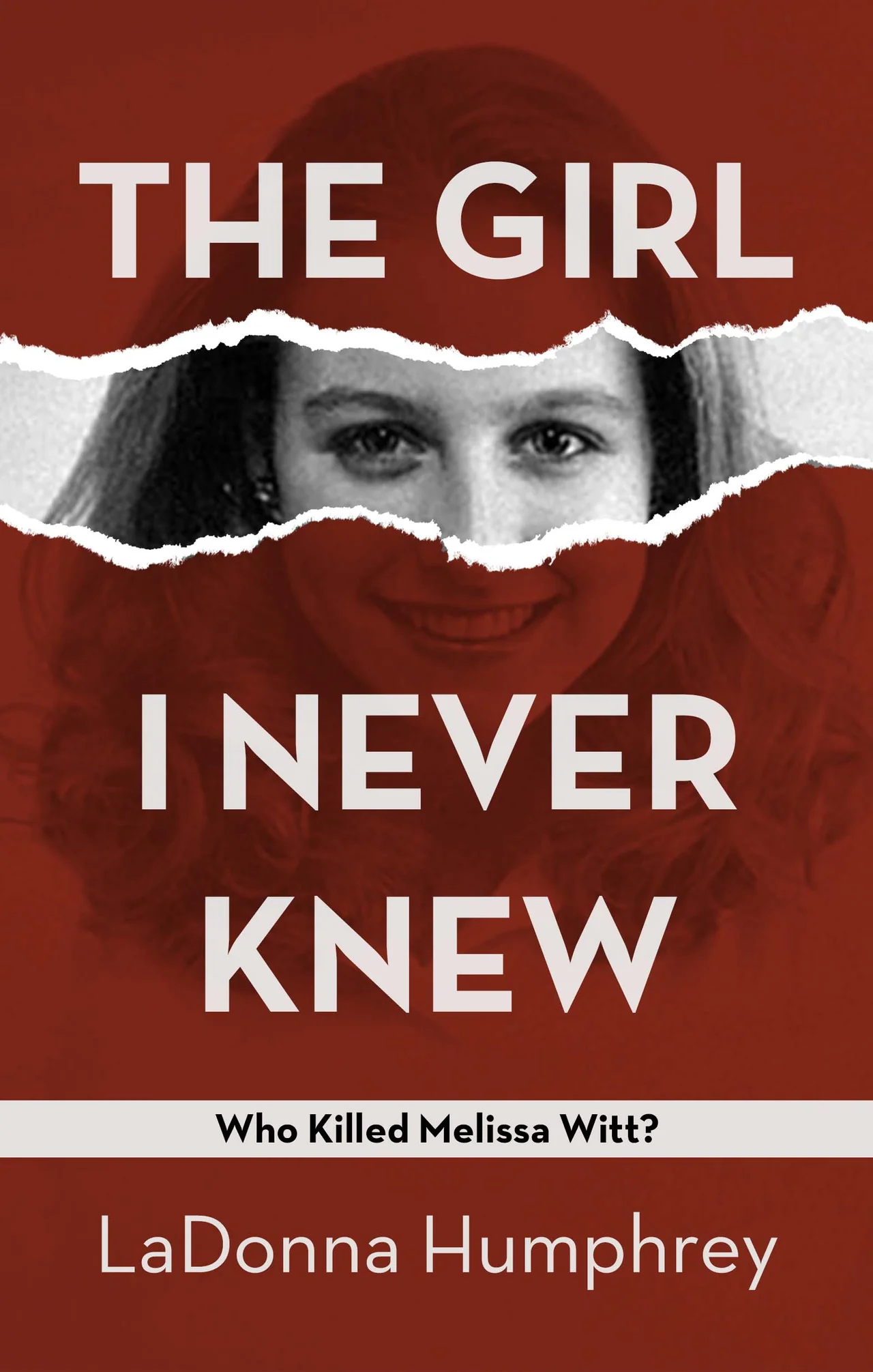
Chapter One: The Discovery
On January 13, 1995, the world, consumed by the murders of Nicole Brown Simpson and Ron Goldman, eagerly awaited the results of a hearing that would determine if evidence challenging Detective Mark Fuhrman’s credibility would be admitted in the O.J. Simpson trial.
As I made my way along the winding roads leading to Fort Smith, Arkansas, I listened as the local radio station announced how prosecutors believed that O.J. dropped a glove as he attempted to sneak back to his mansion the night of the Simpson and Goldman murders. Judge Lance Ito was also expected to rule whether O.J. Simpson’s former wife would be required to appear in court.
The unspeakable events surrounding the murders proved to be sensational, dark and shocking. It was the perfect storm for a true crime addict. And I was hooked. At 21-years-old, I was already deep into my obsession. My fascination with murder mysteries gave me an adrenaline rush. The fix of the “who”, “what,” “when,” and “where” kept me reading every true crime novel I could get my hands on.
On this particular day, as my obsession kept me tuned in to the radio for the O.J. Simpson case, another announcement caught my attention. A body had been found in the Ozark National Forest and authorities were on the scene. They suspected the body could be that of 19-year-old Melissa Witt.
As my Nissan Altima crept along the two-lane highway of U.S. 71 that was at the time the main route between Fayetteville and Fort Smith, Arkansas, I gazed into the Boston Mountains and watched dark clouds roll in.
At the same time, a chill settled in across the Ozarks. The clouds opened up and unleashed torrents of furious rain on a remote and lonely crime scene. As it turns out, roughly 56 miles away in the Ozark National Forest, a beautiful landscape of trees and mountains had been hiding a terrible secret.
On January 13, 1995 at 9:40am, two animal trappers, about 15 miles north of Ozark, stumbled upon what they believed could be a mannequin lying face down in the woods about 30 feet off of the main road. The two men, avid outdoorsmen, had walked this very path the day before. There had been nothing there.
As they approached the strange mannequin lying in the woods, it became clear that what they found was something much more sinister. After 45 long days, the remote Forest Service Road 1551 in the Ozark National Forest had finally unearthed the unthinkable: the decomposing nude body of a young, white female.
Frantic, the pair immediately called the Franklin County Sheriff’s Department. Upon receiving the news, Sheriff Kenneth Ross contacted Detective Sergeant Chris Boyd with the Fort Smith Police Department Major Crimes Unit.
Over 20 years later, as I sat to interview the now former Detective Boyd for a documentary I am producing on the Melissa Witt case, he could still vividly recall that cold and rainy morning.
“At the time, the police department was in the Sebastian County Courthouse and I distinctly recall walking through the basement to get to my office in the Detective Division. That’s when I received a phone call from Sheriff Ross.”
As the retired Detective described the phone call, his expression turned serious and somber. I’d seen this look before. It was the expression of a man haunted by the unsolved murder of an innocent young woman.
“Sheriff Ross told me on that call that he thought he had found the body of Melissa Witt. And knowing him like I did at the time, I figured he was probably right. I had him describe to me what he was seeing and what the body looked like. Once he gave me the description… well, I knew I had to rally the troops at that point. We needed crime scene techs and detectives at that scene immediately.”
As the former Detective described the events that unfolded the morning of Friday, January 13, 1995, my own memories flooded back. When I close my eyes, I can still feel the icy chill in the air. I remember the rain came down in heavy thuds, hard and fast, soaking my clothes as I ran across the parking lot. Another memory of me complaining to my coworkers about the miserable weather conditions on that day also replayed in my mind: “Why did this beautiful day drastically turn out to be so tragic?” My words unknowingly foreshadowed events that would haunt me almost two decades later.
As Jay C. Rider entered the room, I nervously stood to greet him. As we shook hands, Rider asked if Melissa and I had been friends, an assumption others often make to explain my passion for finding justice for a girl I never knew.
“No sir. I never knew her. We had mutual friends, but we never met.” Rider eyed me skeptically, nodded and said, “I guess that makes two of us.” Rider’s tough demeanor fueled my anxiety. I reacted by firing off the most difficult question I could muster about the Witt case:
“Tell me about January 13, 1995. The day you found Melissa Witt’s body.”
Rider described the day as normal, even for a Friday the 13th. “Don’t get me wrong, I’m not a superstitious guy. It was a normal day. It started off sunny -- a perfect day. I decided to get some work done around the office when the phone call came in from Sheriff Ross. That’s just about the time, as you can imagine, all hell broke loose. We all headed out to that crime scene. We feared the worst… that this body was Melissa Witt.”
News reports of the crime scene describe a lonely, remote logging road near Turner Bend just north of Ozark. I knew the location of Melissa’s body would reveal details about her killer.
“Can you tell me more about the location?” I asked.
“It was a logging road. More or less a single lane road, rough terrain, off the main gravel area. The road was mainly accessed by loggers clearing and cutting the national forest,” Rider explained, “Trappers, hunters, campers and sometimes local kids looking to party used that road. Believe it or not, the logging road ended - like a cul de sac - so it was a dead end. A remote, hopeless dead end.”
“What else do you remember about that day?” I asked.
“I will never forget that day,” Rider explained. “We started working the crime scene and the temperature dropped drastically. It started to rain - hard rain - rain that was actually coming in sideways. The wind was blowing hard and it was miserable. None of us had jackets or anything else because it had started off as such a perfect day. I remember finding a raincoat in my car and trying to find a shirt or something to change into so I could stay warm.”
Rider’s description of that fateful morning closely paralleled my own memories. But now it seemed that what we had witnessed was so much more than just a rainstorm. Instead, maybe we experienced the heavens releasing an unrelenting stream of tears for a girl we never knew.
The medical examiner’s report revealed that the official cause of death was “asphyxiation by strangulation.” Leaves and soil found in Melissa’s airway indicated she had been strangled face down and she had inhaled debris from the forest floor as she fought for her life.
Laboratory testing on the debris found in Melissa’s airway gave investigators an important clue: the debris was native to the Ozark National Forest. This told investigators that she had been killed at or near the location where her body was discovered. The medical examiner’s report also yielded another important clue: Melissa had non-fatal trauma on the side of her head that was believed to have been caused by a blow or a fall.
Armed with this information, investigators began to put together a profile of Melissa Witt’s killer and two scenarios emerged: The killer was either a local or someone who frequented the area from out of state to hunt, hike, camp, or fish. Melissa’s body could have been disposed of in many places but her killer chose this remote location - an area so isolated that if you had never been there before, it would be almost impossible to find. A more detailed examination of the crime scene shocked investigators. Indentations behind a large headstone-like rock positioned between two small trees revealed that her body had initially been hidden there.
According to police records, Melissa’s decomposing body had visible marks where someone, presumably the killer, had grabbed hold of her and dragged her body in order to move her closer to the road.
“It would have been a gruesome task,” Jay C. Rider explained. “Think about it, Melissa’s body had been out in the elements for 45 days and was in advanced stages of decomposition. There was small animal activity on the body and the scene was… it was brutal. Whoever moved that body did it so it could be found more easily. Maybe so her mama could give her a proper burial. Regardless, the task was gruesome and we are still trying to figure out who moved her body and why.”
A strange phone call made to police a day or two prior to the discovery of Melissa’s body would provide a different clue. The caller left a voice message at the Fort Smith Major Crimes unit one evening. On the voice message recording, a lady called and with a thick Southern accent could be heard saying, “Go ahead and tell them what you found.” There also was a younger male voice, also with a thick Southern accent who was reported saying, “No, I can’t,” and then the phone disconnected. Did the young man who was part of the mysterious phone call discover Melissa’s body in the woods and move it from behind the rock so she could be found? Was he scared he could be blamed for the murder? Sadly, we may never know. Despite extensive efforts to identify the people responsible for that phone call, their identity remains a mystery.
As I sat with retired investigators decades after this heinous crime, they described additional clues found at the crime scene such as cigarette butts and papers found near Melissa’s body. What was even more puzzling were the items that were missing from the crime scene: Her clothing, purse, wallet, remaining gold hoop earring, and her beloved Mickey Mouse Watch. (Gold hoop earrings and Mickey Mouse watches were very common for teenagers in the ‘90s. I certainly had them too.) Both retired Detectives Boyd and Rider seem to think that the killer kept Melissa’s watch for a very specific reason.
“A sociopath maybe wanted to keep it as a memento to represent the relationship they once had with Melissa,” explains Rider, “As a trophy of some sort.”
The discovery of Melissa’s body fueled an obsession in Rider to find justice for her at all costs.
I quickly began to recount the facts of the case for myself: Melissa was found nude near a headstone-like rock. She had been strangled and her clothes, shoes and Mickey Mouse watch and jewelry were removed and have never been located.
Determined to learn more about the psychology of this type of killer and crime, I obsessively began to research homicidal strangulation. I discovered that in a high percentage of cases, the offender and the victim have a family relationship or a romantic relationship.
Seventy-five percent of strangulation victims are females, with the most frequent motives being rape, sexual jealousy, or personal rivalry. Research also suggests that females are predominantly the victims in homicidal strangulation because they are more likely to be the targets of sexual assaults.
Could this be why her body was found nude? Was she sexually assaulted? Unfortunately, we may never know for certain. According to the medical examiner’s report, it was impossible to determine if she had been raped.
I kept researching. I found that a high percentage of female victims in homicidal strangulation are murdered due to a quarrel in their relationship and/or due to unrehearsed violence applied by bare hands to put the victim at a physical disadvantage and render the victim incapable of resisting. In 86% of the strangulation cases the victim was found at the scene of the killing. In 22% percent of these cases, the victim was found outdoors. In 17% of these cases, the offender stole something from the victim. In 14% of all of these cases, the victim was first hit with a blunt instrument.
A cold chill went down my spine. Did Melissa know her killer?
I compared these facts to what I had learned about the gruesome murder:
1) According to the autopsy report, Melissa was hit in the head with a blunt instrument.
2) She was found strangled, outdoors, and she was naked -- her clothing and personal belongings had been taken from her.
3) The remote location was familiar to her killer. Authorities believe he had been there before.
I began to look even closer at events that unfolded on the day Melissa disappeared. From all reports, the day started off routinely. She spent the first part of the morning with her mother, Mary Ann. The honor student would head to Westark Community College next. After that, she went to lunch with a friend then off to her job as a dental assistant.
However, before she left that morning, Melissa had a minor disagreement with her mother. She had asked to borrow money, and Mary Ann, in an effort to teach her daughter money management, had told her no. Melissa and her mother were especially close. They shared the same beautiful smile, kind heart, and innocent outlook on life.
Before Mary Ann left for work that morning, she left a note for Melissa reminding her she would be bowling with her league that evening and offered to buy her a hamburger. She signed the note, “Love, Mom”
At five o’clock that night, after clocking out of her job as a dental assistant, Melissa discovered that her 1995 Mitsubishi Mirage wouldn’t start. After a few tries, she gave up and waited with a co-worker until a local businessman, later dubbed the Good Samaritan, gave her car a jump.
Police reports explain how Melissa’s dome light was left on by mistake, draining the car battery. Investigators tracked down the Good Samaritan and interviewed him multiple times before ultimately clearing him in the teenager’s disappearance and murder.
“People ask about the Good Samaritan all the time because those events leading up to Melissa’s abduction seem suspicious,” Rider explained. “I mean, the Good Samaritan seems suspicious until you realize how many times he was questioned.” He was cleared of any suspicion in Melissa’s murder.”
We know that, once Melissa’s car started, she went home to change out of her uniform. Those clothes were found crumpled on her bedroom floor. Mary Ann Witt was able to determine that her daughter had then donned a white V-neck sweater and jeans.
Melissa must have seen her mom’s note, because authorities believe she headed to Bowling World, arriving between 6:30pm and 7:00pm. She parked in the northwest corner of the lot. She never made it inside. There were no cameras to record the events that unfolded in that parking lot that night. Witnesses would later tell police they heard a woman screaming, “Help me!”
Two decades later, as I poured over police files and news footage, my heart broke to learn that Mary Ann was haunted by the note she left for Melissa that fateful Thursday. In one interview she is quoted as saying, “I try not to think about how our lives would be different if I had not invited Melissa to Bowling World that night. There is no use thinking about it. I know she is gone. But my heart…. You know, as a mom… I sometimes wonder what if I had done something differently.”
At approximately 7:45pm, Melissa’s car keys were found in the parking lot and were turned in to the front desk of Bowling World. No one noticed the splatters of blood that were slowly drying on the metal keys.
Since Melissa never entered the bowling alley that night, her mother simply thought she had decided to go out with friends instead. Mary Ann went home expecting to see her daughter later that evening. Hours passed and Thursday slowly turned into Friday.
At nine o’clock on Friday morning, Mary Ann reported Melissa as a missing person. By Saturday, Melissa’s friends and family were passing out flyers, blanketing the River Valley with over 6,000 pleas for help in finding the missing teenager.
I lived in Northwest Arkansas and remember seeing the story of Melissa’s disappearance light up news channels. Her picture seemed to be everywhere. Curious, I reached out to my friends in the River Valley. It turns out they knew her. Their voices trembled as they shared their worst fears with me:
“Melissa would not disappear like this.”
“Where could she be? This is not like Melissa at all.”
“I hope she’s okay. I am scared she’s been hurt.”
Christmas passed and the new year rang in but there was still no Melissa Witt.
For more than a month, I, like the rest of the community, sat on the edge of my seat questioning what had happened to the beautiful All American Girl. None of us expected the story to turn out the way that it did.
A quote by the late Michelle McNamara in her book, I’ll be Gone in the Dark: One Woman’s Obsessive Search for the Golden State Killer, resonates with me. She wrote, “He loses his power when we know his face.” These words sum up the rationale behind the countless hours I’ve spent investigating the Melissa Witt case over the past six years. I want to see his face.
For over two decades the identity of Melissa’s killer has been hidden among the dense trees and thorny undergrowth rooted deeply in the uneven ground of a remote mountain top in the Ozark National Forest. I envision him, a shadow-like figure, dark and dreadful, his confidence anchored in the predictability of a murder case slowly growing cold.