Eighty-Two Names. One of them is Willis.
Some stories don’t let go of you.
They sit with you. They follow you. They demand your attention long after you close the file or shut down your screen.
For me, Alaska is full of those stories.
I didn’t fall in love with Alaska because it’s vast or beautiful—though it is both. I fell in love with it because of its people. And I’ve stayed because too many of them are missing, and too few people are talking about it.
This post begins with one man.
Willis Edwin Derendoff.
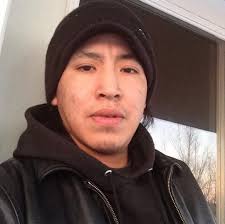
Willis Derendoff Should Have Come Home
Willis was 34 years old when he disappeared.
In the fall of 2020, after finishing seasonal work at a mine near Huslia, Willis traveled to Fairbanks. It wasn’t a permanent move. It wasn’t a reckless one. He had plans. He had a room at an extended-stay hotel near Airport Road—a temporary place that suggested rest, recovery, and intention.
He was last seen on November 10, 2020.
By November 12, his family reported him missing.
From that moment forward, their lives split into before and after.
Willis was about 5’9”, roughly 160 pounds, with black hair and brown eyes. He was last known to be wearing a black leather jacket, red fleece pants, and possibly a beanie. His phone was broken. He had lost his ID and debit card. He wasn’t feeling well and had planned to take a COVID test. These details mattered then. They still matter now.
But what followed was something families of the missing know too well—uncertainty layered on top of silence.
There were reports of possible sightings in Fairbanks in the days after Willis vanished. None were ever confirmed. No verified contact. No resolution. Just questions that refuse to settle.
And so his family searched.
His mother left Huslia and stayed in Fairbanks for months—organizing searches almost every single day. Sometimes twenty people showed up. Sometimes more than a hundred. They searched through snow, exhaustion, and grief. Donations came in, and every dollar went toward keeping the search alive—lodging, car rentals, gas cards, flyers.
They weren’t just searching for Willis. They were searching for others too.
Because Willis wasn’t the only Alaska Native person who went missing in Fairbanks during that time.
And none of them have been found.
The family hired a private investigator. They created a reward. They built a Facebook page so Willis’s name wouldn’t disappear the way systems often allow Indigenous names to do. They honored him through Tea for Willis—a quiet, powerful ritual of remembrance, because remembering became an act of resistance.
Willis’s father searched too—until illness forced him home. He died in 2021, heartbroken, never knowing what happened to his son.
This is what unresolved cases do.
They don’t just steal a person.
They slowly drain everyone who loves them.
The Alaska State Troopers say Willis’s case remains open. Someone knows something. Someone saw something that mattered—even if it didn’t seem important at the time.
Willis Derendoff is missing.
He is not forgotten.
And his story deserves to be told until answers are found.
Willis Is Not Alone
As I followed Willis’s case, I began seeing the same patterns again and again. Limited information. Minimal coverage. Families doing the work systems should already be doing.
That’s when the names started stacking up.
Below are 82 Native Americans currently listed as missing in Alaska. This is not a statistic. This is a reckoning.
Donald Adams
Albert Scott Agathluk
Augustine John Akitalinok
Mary Anne Alexie
Nathan Anungazuk
Eric M. Apatiki
Olin Apatiki
Michael Wassillie Ayojiak
Curtis Brian Ayuluk
Cassandra Lee Boskofsky
James Michael Burk
Chad Chadwick Sr.
Francis Lee Allen Charles
Angela Ungaiak Chingliak
Charlie T. Chocknok Sr.
Raymond Dean Clark
Kelly Earlene Lucy Ro Coopchiak
Tracy Lynn Day
Gabriel Adams Demmert
Willis Edwin Derendoff
Kevin Brian Douglas Lane
Martin Ebona III
Brian Edward Erickson
Karen Dean Evan
Stella Anastasia Evon
Douglas Jared Foster
Pauline Elsie Geary
David Post George
Lorraine Juanita Ginnis
Marion Gonangnan
Kristopher Paul Gregory
Gust William Griechen IV
Alfred Robert Hamilton
Lawrence Michael Hanson
Walter Hawk
Archie Carl Henry Jr.
Jonathon Michael Henry
Lancelot Burt Immergan
Ida Rose Jacomet
Noah Jessup
Ingvar Daniel Johansen III
Tom John John
Theresa Johnny
Jedidiah David Trinity Kowchee
Raleigh Kuvun Kowunna
Justina Beatrice Kunayak
Albert Adam Kvamme Jr.
Leonard Lane Jr.
Levi Lott Sr.
Marjorie Maldonado
Robert Christopher Mark
Joe Riley Martin
Frank Harding Minano Jr.
Samuel Jay Moses
Debra Sue Nictune
Alexie Lewis Nose Jr.
Florence Helen Okpealuk
Ward Kakonna Olanna
Thomas Ooka
Sonja Grace Ozenna
Brandon Tyler Phillips
Ernest Lincoln Saccheus Jr.
Thomas Henry Saccheus Jr.
Doren Lyle Sanford
Eli Robert Sharclane Jr.
Michael J. Sharp
Shanelle Mary Shellikoff
Valerie Jeanette Sifsof
Linda Louise Skeek
Reginald Skeek Jr.
Mary Jean Sylvestre
Demetri Alec Tcheripanoff Jr.
Michelle Terri Tugatuk
Raymond James Vincler
Jondalar Joseph Washington
Bernice Rene Waska
Elizabeth Karen Wassillie
Wilson Joshua Wassillie
Dennis Billy Westlock
Michael P. Williams
Loridee June Wilson
Richard Wilson Wright Jr.
Eighty-two names.
And this list is not finished.
Why Alaska Has Captured My Heart
Alaska’s size is often used as an explanation.
Its isolation as an excuse.
But those things do not explain why Indigenous families are left to search alone, advocate alone, and grieve in silence.
Too many cases stall.
Too many disappear quietly.
Too many names fade from public view.
I can’t accept that.
I write because silence is dangerous.
I document because forgetting is easy.
I stay because someone has to.
This isn’t about attention. It’s about accountability. It’s about making sure stories like Willis Derendoff’s don’t disappear simply because they’re inconvenient or uncomfortable.
Help Me Keep This List Accurate—and Growing
This list matters. But I know it may be incomplete or imperfect.
If a name is missing, please contact me.
If a name is misspelled, a detail is wrong, or a case needs correction, I want to fix it.
Accuracy is respect.
Names are sacred.
I want this to be living documentation—updated, corrected, and strengthened by families, advocates, and communities who know these stories firsthand.
If You Want to Build Something Bigger
If you are in Alaska—or connected to these cases—and you are tired of waiting quietly, reach out to me.
If you want help amplifying a case.
If you want help documenting what’s been ignored.
If you want to be part of building a sustained movement for Alaska’s missing and murdered Indigenous people, please reach out.
And as long as I have a voice, I will keep saying their names.