KATHLEEN, VERONICA & THE UNWRITTEN DEAD
The Nightmare Alaska Refuses to Look At
There are crimes that cut so deep they don’t just shatter the families who loved the victims — they fracture the conscience of an entire nation. The murders of Kathleen Jo Henry and Veronica Abouchuk should have done exactly that.
They should have forced Alaska and the United States to finally confront the epidemic of violence against Native women — an epidemic so severe that Alaska Native women are statistically among the most murdered, most assaulted, most disappeared human beings in the country.
Instead, the system shrugged.
Like it always does.
Like it has for generations.
It took a stolen phone — a pure accident — to expose one of the most sadistic killers walking America in 2019. It took a sex worker living in the woods, not the state, not the police, not the institutions supposedly built to protect women, to bring forward the evidence that finally led to answers.
And when the truth came out — when detectives looked at that SD card and saw Kathleen Jo Henry being tortured, strangled, filmed, narrated like she was nothing more than a character in a killer’s fantasy — it exposed more than a murderer.
It exposed a systemic rot that has allowed violence against Native women to flourish in Alaska, unchecked and unchallenged, for decades.
This isn’t just a murder story.
This is a story about a hierarchy of human value — who is protected in America and who is disposable.
This is a story about complicity, cowardice, and silence.
And this is a story about the women who refuse to let any of it slide.
The Murders of Kathleen Jo Henry and Veronica Abouchuk
To understand the full scope of the failure here, you have to understand the victims — not the sanitized versions that courtrooms offer, but the real women.
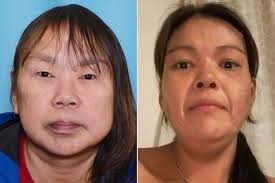
Kathleen Jo Henry, 30, was Yup’ik, from the small village of Eek. She was a poet, a social media regular, a woman who had battled addiction and incarceration and kept fighting anyway. She was trying — truly trying — to rebuild her life. And for that, a predator waited.
Veronica Abouchuk, 52, from a remote Western Alaska community, also struggled with homelessness in Anchorage. She was mother, sister, friend — a woman with roots stretching through generations of Native resilience. She, too, was vulnerable in a world that preys on the vulnerable.
Both women deserved safety.
Both women deserved recovery.
Both women deserved a justice system that cared if they lived or died.
Instead, their killer — Brian Steven Smith, a South African immigrant who had just become a U.S. citizen — roamed Anchorage freely, leaving a trail of misogyny and racism that everyone ignored until it was too late.
He filmed Kathleen’s murder.
He admitted to killing Veronica.
He laughed in interviews.
He narrated his own violence like a man who believed he would never face real consequences.
Why?
Because for too long, men like him have been right.
Native women can disappear, be murdered, be brutalized, and the world simply moves on.
But not anymore.
Because Alaska Native women, Indigenous advocates, sex worker advocates, retired police officers, and ordinary citizens refused to stay silent. And what they unraveled is bigger — and uglier — than anyone wanted to admit.
Brian Smith: A Predator Alaska Allowed to Move Unchecked
Smith didn’t just commit murder — he documented it. He curated it. He spoke to the camera like it was an audience waiting to applaud. That SD card, labeled “Homicide at Midtown Marriott,” contained nearly an hour of the most brutal images investigators had ever seen.
One detective said it was the worst thing he’d witnessed in decades of law enforcement.
Smith treated these women like props.
He believed no one would ever find out what he had done.
And even if they did?
He believed he would walk away.
Because he understood the United States — especially Alaska — has a long, bloody history of ignoring violence against Native women.
This was not just murder.
This was a hate crime against a people targeted for centuries.
This was a pattern, not an accident.
And when Smith told detectives there might be more victims?
Advocates believed him.
Investigators believed him.
Anyone with common sense believed him.
Because men like this do not stop at two.
But here’s the part the public wasn’t prepared for:
Smith wasn’t acting alone.
He wasn’t operating in isolation.
He was sharing his crimes with another man — a man who, to this day, walks free.
And that’s where this story gets even darker.
The Videos: When a Murderer Turns His Crimes Into Content
The reason any of us even know Kathleen’s name is because her killer couldn’t resist turning her death into a production.
On an SD card labeled like a horror movie, Brian Smith recorded more than twenty minutes of video and dozens of still images of Kathleen being tortured and killed in a hotel room at a midtown Anchorage Marriott-affiliated property.
It wasn’t a moment of rage.
It wasn’t a snap decision.
It was a performance.
He posed her.
He talked to the camera.
He acted like he was the director instead of a predator filming human agony.
When that SD card was later turned over to Anchorage Police — not by an investigator, but by a woman living in a tent in the woods who ended up with Smith’s phone and realized what she was looking at — it blew the case open.
This is the part that never leaves me:
It took a homeless woman, a stolen phone, and sheer luck to stop a man who had already murdered at least two Alaska Native women.
Not a proactive investigation.
Not a high-tech task force.
An SD card someone happened to find.
If that doesn’t terrify you about how little this system is built to protect women like Kathleen and Veronica, I don’t know what will.
The video and photos were so disturbing that seasoned detectives called it the worst thing they’d ever seen. In court, jurors watched as Smith’s own recordings became the strongest evidence against him — a man so convinced he’d never be punished that he documented his crimes like trophies.
And when detectives dug further, they found something else: images of another woman — unidentified, possibly Native or Asian — who appeared beaten and unconscious. A forensic artist was brought in to create a sketch. That sketch is believed to represent a possible third victim.
How many more women did he photograph?
How many more did he hurt?
How many never even made it to the status of “known victim”?
That’s what advocates in Alaska call the unwritten dead — the names that never make headlines, the women whose disappearances never turn into cases because nobody with power cared enough to look.
And that’s why this isn’t just a true crime story.
It’s an indictment.
The Trial: 226 Years, and It Still Doesn’t Feel Like Justice
In February 2024, an Anchorage jury found Brian Smith guilty on all fourteen counts against him: two counts of first-degree murder, as well as second-degree murder, sexual assault, tampering with physical evidence, and misconduct involving a corpse.
In July 2024, Judge Kevin Saxby sentenced him to 226 years in prison, matching the state’s recommendation and ensuring Smith will die behind bars.
Two Alaska Native women murdered.
Their final moments captured in images too horrific for the public to see.
A community shattered.
The sentence sounds huge — and it is.
It matters.
It sends a message that these women were not disposable, not “less-than,” not footnotes.
But it’s still not enough.
It doesn’t fix the fact that Smith moved through Anchorage unchecked for years.
It doesn’t repair the harm done to every Indigenous woman who looked at that courtroom, that man, and that SD card and thought: That could have been me. That could have been my daughter, my sister, my friend.
And it doesn’t answer the question that hangs over this entire case like smoke:
Who else did Brian Smith kill?
Because prosecutors themselves acknowledged that the photos and recordings suggest a pattern, not an isolated incident. Journalists, advocates, and investigators have all raised the possibility of more victims — women who may never be identified, whose deaths may never be fully investigated.
One year after sentencing, Alaska’s News Source released a documentary digging into exactly that question — who else might he have killed? — and they weren’t alone. MMIP advocates, sex worker safety advocates, and family members of possible victims have been doing their own heavy lifting, combing through police documents, trial evidence, and audio recordings because they refuse to let this case close neatly on paper while real questions remain unanswered.
The state locked him up.
Good.
But shutting the door on his cell does not close the book on what he did.
And it does not absolve the system that made him feel safe enough to film a murder.
The Man in the Shadows: Ian Calhoun
If you want to understand why people are furious, look at who isn’t in prison.
During Smith’s trial, prosecutors introduced a series of text and Facebook messages between Smith and an Anchorage musician named Ian Calhoun. According to testimony and reporting, Smith reached out to Calhoun in the hours after he killed Kathleen Henry — while her body was in the back of his truck under a tarp — and told him he had something he wanted to show him. They arranged to meet at a park near Calhoun’s home.
Later, when a news story broke about a body found off the Seward Highway, Calhoun allegedly sent Smith the link. Smith replied in a way that made clear he knew exactly what the article was about.
Public reporting shows Calhoun responded with a remark about snow covering the body, and that he and Smith went back and forth about it.
Let me be very clear here:
Calhoun has not been charged with any crime in connection with these murders.
He invoked his Fifth Amendment rights during the trial and was not granted immunity to testify.
But that has not stopped people — especially Alaska Native women and MMIP advocates — from asking the question that should haunt every single one of us:
If you receive messages like that from a man who ends up being convicted of murdering Alaska Native women…
If you meet him at a park while a body is in his truck…
If you’re texting about snow covering the remains of an Indigenous woman…
How do you walk away with zero legal accountability?
Activists like Antonia Commack, retired police officer Michael Livingston, and sex worker advocate Amber Batts have been vocal and relentless, arguing that Calhoun’s actions and knowledge demand scrutiny — and that the failure to charge him with anything sends a crystal-clear message: you can be close to the orbit of male violence against Native women and still walk away untouched.
There is now a petition with thousands of signatures calling for his arrest. There have been protests outside his home, at the courthouse, and at police headquarters — Native women and allies standing in the snow and the cold with signs that say things like “We do not feel safe” and “Arrest Ian Calhoun now.”
Prosecutors respond by saying they do not have proof beyond a reasonable doubt that he committed a crime under current law. Police say there’s no probable cause to charge him with hindering prosecution or failure to report. They point directly at the weakness of Alaska’s existing statutes — especially the law that supposedly governs failure to report violent crimes against adults.
And that brings us straight to the structural failure at the heart of this.
The Law That Lets People Look Away
Under Alaska’s failure-to-report statute, AS 11.56.767, a person who witnesses or has certain knowledge of violent crimes against adults — including murder — can be charged for not reporting. But the problem is what comes next: the law treats this as a minor violation, punishable by a fine that has, historically, been as low as $500.
That’s not a deterrent.
That’s pocket change.
That’s the system saying:
You can watch, you can know, you can stay silent — and the worst we’ll do is give you a parking ticket for it.
In commentary about this law, state officials have openly acknowledged that there is no broad, general duty for citizens to report crimes or assist law enforcement — and that to charge someone with hindering prosecution, the state must prove they meaningfully helped a perpetrator avoid justice, which is often difficult.
So what does that mean for cases like Brian Smith’s?
It means that if you’re on the receiving end of texts that strongly suggest a woman has been killed…
If you meet the man responsible in a park while he’s driving around with her body…
If you exchange messages after a body is found off a highway…
You can still walk away without legal consequences, as long as the state can’t prove you crossed a certain technical line.
In a world where Native women are being hunted, that is not a neutral legal gap.
That is an active danger.
Because silence is not neutral here.
Silence is collaboration.
And that is exactly why advocates like Amber Batts are pushing for Kathleen’s Law — a proposed reform that would transform failure-to-report from a weak violation into a misdemeanor with real accountability, real consequences, and a real expectation that if you know about violent crime, you don’t get to just shrug and look away.
The bill, named after Kathleen Jo Henry, would strengthen Alaska’s duty-to-report framework by:
- Making failure to report violent crimes against adults a more serious offense
- Requiring people to report when they witness or are shown evidence of crimes like murder or kidnapping
- Creating penalties that reflect the gravity of staying silent when someone is dead or in danger
In other words: if you know enough to send news links about a body and trade comments about snow hiding her, you don’t get to be untouchable anymore.
The Protests: Native Women Refuse to Be Quiet Corpses
The protests demanding accountability for anyone who knew about Brian Smith’s crimes are not just about one drummer in Anchorage. They are about survival.
When Alaska Native women hold signs that say “We do not feel safe”, they are not being dramatic. They are stating a fact backed by decades of data and experience: Indigenous women in Alaska are targeted at disproportionately high rates for homicide, sexual violence, and disappearance. The missing and murdered Indigenous people crisis is not an abstract statistic — it is their daily reality.
So when the justice system says:
- We can lock up the man who pulled the trigger,
- We can sentence the man who tightened the ligature,
- But we can’t do anything about the people around them who stayed quiet…
What Native women hear is:
Your lives are negotiable. Your safety is optional. Your killers may go to prison, but the people who treat your bodies like entertainment get to keep their lives, their careers, their freedom.
That’s why they organized protests in front of court buildings, police headquarters, and Ian Calhoun’s neighborhood. That’s why thousands have signed petitions demanding his arrest or, at a minimum, serious scrutiny under a strengthened law.
And that’s why they continue to fight for Kathleen’s Law, not as some theoretical reform, but as a lived demand:
If you know about violence against Indigenous women and do nothing, you should face consequences.
Not because we want more people in cages.
Because we want fewer Native women in graves.
The Unwritten Victims: Who Else Did Brian Smith Kill?
Even with Smith locked away for centuries on paper, the unease doesn’t go away.
Investigative reporting and a recent documentary have raised disturbing questions about women who appear in Smith’s photos, about possible victims whose stories were never brought into the courtroom. Some families, like the relatives of Cassandra Boskofsky, believe images recovered from Smith’s devices may show their loved one — a woman now legally declared dead despite no homicide charges filed in her case.
Police have not accused Smith of killing Cassandra. They have not publicly confirmed many of the suspicions advocates have. But the images, the tattoos, the patterns of violence — they all suggest this story is far bigger than two counts of murder.
And again, who is doing the heavy lifting here?
Advocates.
Family members.
MMIP organizers.
They are the ones cross-referencing tattoos, tracking timelines, connecting the dots between women overlooked and a man the state finally acknowledges is dangerous enough to lock away for 226 years.
The state did its job halfway:
It shut the cell door.
The community is the one refusing to shut the file.
This Is Not Just About Alaska
If you’re tempted to dismiss this as “an Alaska thing,” don’t.
Everywhere in this country, Native women, Black women, sex workers, unhoused women, women struggling with addiction — the women our society labels “messy” or “disposable” — live and die at the margins of law and attention.
They are overrepresented in homicide stats and underrepresented in news stories. Their disappearances are shrugged off as “lifestyle choices.” Their killers are frequently serial offenders who learned early that some victims don’t set off alarms.
What makes this case different isn’t the brutality. There are far too many brutal cases.
What makes it different is the evidence.
You cannot argue that Kathleen and Veronica “just disappeared” when you have a killer who filmed one murder and admitted to another; when you have text messages suggesting he was sharing the aftermath with others; when you have advocates presenting recordings, phone logs, and analyzed documents that show the system knew enough — and still chose to keep its response narrow and safe.
We are not guessing here.
We are looking at the receipts.
Demand: No More Dead Native Women. No More Silence. No More Excuses.
So where does that leave us?
It leaves us with a man in prison for the rest of his life.
It leaves us with two Alaska Native women whose names we know — and an unknown number we may never learn.
It leaves us with a musician whose proximity to horror has sparked outrage but no charges.
It leaves us with a law so weak that failing to report a murder is barely more serious than a parking violation.
And it leaves us with a choice.
We can accept this.
We can nod solemnly at the headlines, say “How awful,” and move on.
Or we can refuse.
We can demand that:
- Kathleen’s Law passes, with teeth – changing failure-to-report into an offense that actually means something.
- Lawmakers stop hiding behind the tired excuse that “the law’s hands are tied” and actually rewrite the law so that silence in the face of murder is no longer a safe option.
- Law enforcement and prosecutors treat the proximity to violent crimes against Indigenous women as a red flag, not a complication to be tiptoed around.
- Media outlets stop sanitizing the brutality and start naming what this is: racialized, gendered violence against Native women, enabled by systems that historically do not care if they live or die.
- Every jurisdiction in the United States takes a hard look at its own failure-to-report statutes and asks: are we protecting victims, or protecting people who want to look away?
If you are reading this and you are angry, good.
You should be.
Direct your anger into something:
Learn more about the case and the unanswered questions:
Anchorage Daily News and Alaska media have covered the trial and the fallout in depth.
Watch coverage like Michelle Theriault Boots’ reporting and long-form video examining the trial and the Calhoun texts.
Follow and support MMIP advocates and organizations on the ground in Alaska who are pushing for change
Read about Kathleen’s Law and contact Alaska lawmakers to support it — even if you live outside the state, your voice amplifies the message that the world is watching.
Share the work of journalists, bloggers, and advocates who have refused to let this story be reduced to “case closed.”
And never, ever forget their names:
Kathleen Jo Henry.
Veronica Rosaline Abouchuk.
They were not props.
They were not content.
They were Native women whose lives mattered.
If this country will not protect Native women, then we will have to build mechanisms that do. Laws that do. Communities that do.
The era of looking away is over.
We are done burying our sisters quietly.
We are done letting killers feel safe.
We are done accepting legal frameworks that treat our lives as optional.
No more dead Native women.
No more silent witnesses.
No more excuses.
Sources (Clickable Links)
Press Releases & Official Statements
- Alaska Department of Law – Press Release on Smith’s Sentencing:
https://law.alaska.gov/press-releases/brian-smith-sentenced-226-years - Alaska Department of Law – Press Release on Trial Conviction:
https://law.alaska.gov/press-releases/brian-smith-conviction
News Coverage & Investigative Reporting
- ABC News Coverage of Conviction & Sentencing:
https://abcnews.go.com/US/brian-steven-smith-sentenced-226-years-murders/story - Anchorage Daily News – Trial Coverage by Michelle Theriault Boots (including Calhoun texts):
https://www.adn.com/alaska-news/crime-courts/2024/02/21/i-have-something-to-show-you-smith-texted-hours-after-killing - Alaska’s News Source Documentary – The Search for Convicted Killer Brian Smith’s Potential Unwritten Victims:
https://www.alaskasnewssource.com/2025/07/11/search-convicted-killer-brian-smiths-potential-unwritten-victims
MMIP Advocacy & Protest Reporting
- KNBA: “Unfinished Business in the Brian Smith Murder Case – Protestors Demand Answers About Ian Calhoun”:
https://www.knba.org/news/2024-03-27/unfinished-business-in-the-brian-smith-murder-case-protestors-demand-answers-about-ian-calhoun - Alaska Public Media Photo & Protest Coverage:
https://alaskapublic.org/2024/03/23/protesters-demand-accountability-in-smith-case
Legal Commentary & Statutes
- Alaska Beacon / News From The States – Commentary on Kathleen’s Law by Amber Batts:
https://alaskabeacon.com/2025/02/24/proposed-kathleens-law-would-hold-those-who-know-about-violent-crimes-accountable - Alaska Statute AS 11.56.767 – Failure to Report a Violent Crime (FindLaw):
https://codes.findlaw.com/ak/title-11-criminal-law/ak-st-sect-11-56-767 - Alaska Statute AS 12.50.101 – Immunity of Witnesses:
https://codes.findlaw.com/ak/title-12/code-12-50-101
Community Advocacy
- Arrest Ian Calhoun NOW Facebook Page (public advocacy & updates):
https://www.facebook.com/p/Arrest-Ian-Calhoun-NOW-61557501831370
- TikTok evidence review & trial audio compilations (community upload):
https://www.tiktok.com/t/ZPRTayd9N
Additional Court & Case Updates
- Anchorage Daily News Full Trial Coverage Archive:
https://www.adn.com/tag/brian-smith - Alaska’s News Source – Continuing Coverage & Follow-Up Reports:
https://www.alaskasnewssource.com/search/?q=Brian+Smith
You can also search out and share trial-audio clips, courtroom discussions about witness immunity, and advocacy videos circulating on TikTok and Facebook that push for stronger laws and accountability. Those recordings matter because they prove what many of us already knew:
The system had the chance to do more.
It chose not to.
Now it’s on us to make sure that never happens again.