
The Girl I Never Knew
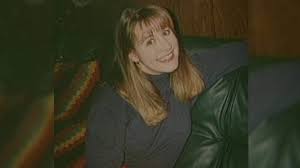
On a bitter January day in 1995, searchers found what they had been dreading — the body of 19-year-old Melissa Witt. She was discovered on a cold, remote mountaintop in Franklin County, Arkansas, far from where she was last seen alive.
It was no accident that her killer chose that location. This was not a place you wandered into by chance. It was secluded, rugged, and hard to access — a place that only someone familiar with the area, and confident they would not be interrupted, would think to use.
From the start, investigators believed Melissa’s body had been moved. There were no signs of struggle, no discarded personal items, no blood spatter — nothing to suggest the murder happened there. Whoever killed her took steps to ensure she was hidden, and that they left behind as little evidence as possible.
The cold, unforgiving mountain air preserved her remains, but it also robbed detectives of vital clues. It was a crime scene chosen with calculation — one that spoke volumes about the killer’s skill, control, and nerve.
Over the years, investigators and independent researchers have looked at multiple suspects. Some were cleared quickly. Others have hovered in the background of this case, never fully eliminated, their possible involvement lingering in rumor and quiet speculation.
Melissa’s abduction was not a crime of chance. She was taken quickly, likely subdued before she could fight back or call for help. Moving her body to that remote location required not only physical strength but also a vehicle, an intimate knowledge of back roads, and confidence that the killer would go unseen.
These are not traits of an opportunistic attacker. This was someone who knew what they were doing.
One name that has surfaced repeatedly in public speculation is Charles Ray Vines — a convicted murderer whose crimes shocked Arkansas in the late 1990s. On the surface, it’s an easy connection to make. Vines was violent, he targeted women, and he was known to kill.
But dig deeper, and the theory unravels.
The timeline of Vines’ known crimes does not align with Melissa Witt’s disappearance and murder. Investigators and case researchers agree that his modus operandi was different — far more chaotic and impulsive than the careful planning evident in Melissa’s case.
Vines’ murders were frenzied attacks, carried out in moments of opportunity. Melissa’s abduction and the calculated concealment of her body were anything but random. There is also no credible forensic evidence tying Vines to her killing.
For those who have pored over the case files, examined the crime scene details, and compared every known fact to Vines’ history, the conclusion is clear: while Vines was a predator, it’s very unlikely that he was Melissa Witt’s killer.
Melissa Witt’s murder remains unsolved. Somewhere out there, her killer is still walking free. Someone knows the truth — a detail they’ve dismissed, a story they’ve never told, or a suspicion they’ve never voiced.
Justice for Melissa will come when that truth surfaces. Until then, her name will not be forgotten. Not by those who loved her, not by those who have fought for her, and not by those of us who have made it our mission to find the man who took her life.
Say her name. Share her story. Someone out there knows
.