The Men Who Don’t Act Alone
I want to be very clear about something:
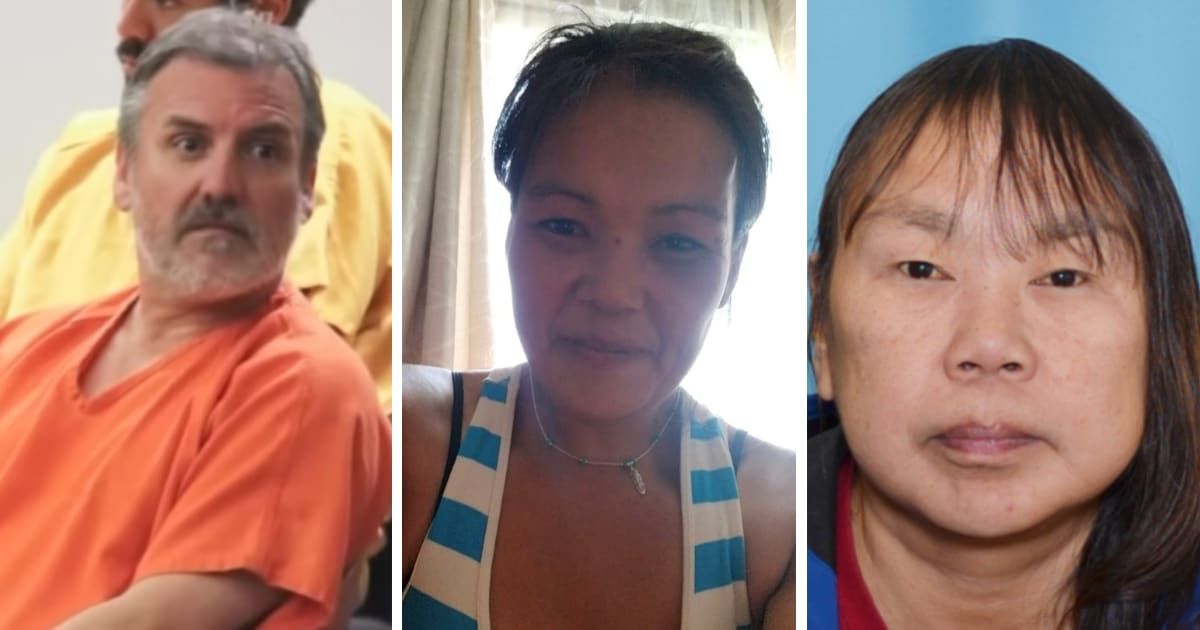
Men like Brian Steven Smith do not exist in a vacuum.
Serial predators are not spontaneous monsters. They are shaped, validated, encouraged, and emboldened—often quietly, often digitally, often in spaces most people don’t want to look at too closely.
And now, as the family of a missing Alaska woman believes she may be Brian Smith’s third victim, the questions we should be asking go far beyond one man.
They lead directly into a darker place.
During and after Smith’s trial, advocates like Antonia Commack, who has long worked in the MMIP space, began digging deeper. She did what too many institutions failed to do: she paid attention. When prosecutors revealed that photos of a possible third victim had been found on Smith’s phone, Commack and others were horrified—not just by the brutality, but by the familiarity.
They recognized the woman.
A butterfly tattoo on the neck. Faded black and blue ink. A detail burned into memory by those who track missing Indigenous women not as case numbers, but as human beings. For Commack, Cassandra Boskofsky’s disappearance had already raised alarms. Seeing those images didn’t feel like a coincidence. It felt like confirmation.
For nearly five years, Cassandra’s family believed she was simply missing—while the man they now believe killed her walked free, carrying images of her suffering on his phone.
Let that sink in.
And then there’s the part that should stop everyone cold.
Evidence introduced at trial showed that Smith did not keep his crimes to himself. He recorded them. He talked about them. He shared them. He texted associates after murders. According to publicly discussed information, he contacted Ian Calhoun after killing one of the women—suggesting he had “something to show him.” Smith allegedly went near Calhoun’s residence and displayed the body of the murdered woman. No report was made. No alarm was raised. There were jokes afterward about police finding the body.
This is not passive knowledge.
This is not ignorance.
This is not “I didn’t know what to do.”
This is complicity through silence at best—and something far darker at worst.
And here’s where I need to say this plainly, without hedging:
I have investigated this world before.
During my work on the Melissa Witt case, I went places most people never want to go—online spaces where rape is fetishized, where murder is eroticized, where women’s suffering is turned into currency. Snuff “fantasy” forums. Encrypted chats. Message boards where men trade violent fantasies like baseball cards and congratulate one another for how far they’re willing to go.
These spaces exist.
They are active.
And they are not harmless.
When a man records the rape and murder of a woman and keeps the footage, the question isn’t why—it’s who was it for.
Who was supposed to see it?
Who was supposed to appreciate it?
Who had already signaled they would?
Predators test boundaries long before they cross them in blood. They look for audiences. They look for approval. They look for other men who won’t flinch.
That is why this case should terrify everyone.
Because if Brian Smith was comfortable enough to document his crimes and share them—or attempt to—then there may be others who knew, watched, encouraged, or stayed silent. And if those men were connected through online groups that glorify rape, murder, necrophilia, or the production and distribution of violent material, then this is no longer just a closed case.
It is an open wound.
So here is my ask—direct and unapologetic:
If you have any evidence that Brian Steven Smith, Ian Calhoun, or any associates were part of:
- online forums or chat groups that glorify violence against women
- snuff “fantasy” or roleplay sites
- groups that trade or discuss rape, murder, or exploitation
- encrypted channels where women were discussed as targets, trophies, or content
Come forward.
If you were in those spaces and left because something felt wrong—come forward.
If you saw usernames, screenshots, conversations, jokes that crossed every line—come forward.
If you were told to stay quiet—don’t.
Silence is how these men survive.
Silence is how they escalate.
Silence is how women disappear.
Cassandra Boskofsky mattered.
Kathleen Jo Henry mattered.
Veronica Abouchuk mattered.
And if there are others—known or unknown—still buried beneath shame, fear, or digital shadows, then the truth deserves daylight.
Break the silence.
Burn the pipeline.
Protect the next woman.