The Ramsey Ransom Note
I’ve spent the past few weeks deep in a rabbit hole—one I’ve been down before, but never with such focus. I’ve read and reread almost every book ever written about the JonBenét Ramsey case, flipping through dog‑eared pages late at night, cross‑referencing old interviews and crime scene reports, looking for something that might make sense of the senseless.
And inevitably, I keep circling back to that ransom note.
It has been dissected, debated, and argued over more times than any of us can count. Most people who follow this case could recite it line by line in their sleep. But after immersing myself in the research, I can’t stop thinking about the oddities in those pages—the strange choices in language, the theatrical tone, and the feeling that whoever wrote it was trying very hard to be someone they weren’t.
Take the opening:
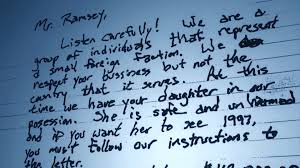
“Mr. Ramsey, Listen carefully! We are a group of individuals that represent a small foreign faction. We do respect your bussiness but not the country that it serves. At this time we have your daughter in our posession…”
A group of individuals? That’s redundant. All groups are made up of individuals. And if you’re trying to sound intimidating, why immediately shrink yourself by calling your organization “small”? Add to that the curious decision to identify as “foreign.” If you are foreign, that’s simply who you are; you wouldn’t label yourself that way. Why not say you’re from a specific country or organization?
And then there are the spelling quirks. “Bussiness” and “posession” are spelled incorrectly—on purpose, many believe—to create the illusion that the writer wasn’t well educated or was perhaps truly “foreign.” But then that same writer goes on to spell words like attache and deviation correctly. Odd, isn’t it? Especially considering the chilling coincidence that in The Prime of Miss Jean Brodie, a book Patsy Ramsey loved enough to perform scenes from in pageants, there’s a reference to spelling the word “possession.”
The note then instructs John Ramsey to withdraw exactly $118,000—the exact amount of his recent bonus, a figure printed on checks sitting in plain sight in the house. A professional kidnapper, or even a true foreign faction, would almost certainly demand a round number—half a million, a million—something that matched the family’s wealth. But this? This feels personal. Familiar.
Then comes the almost motherly guidance:
“Make sure that you bring an adequate size attache to the bank… I advise you to be rested.”
Who tells a father to get a good night’s sleep before a ransom drop? Who explains what size bag to bring as though he’s incapable of figuring it out himself? It’s oddly nurturing. And again, attache—a word with French flair, just like JonBenét’s name itself, which Patsy loved because of its sophistication.
The writer’s voice drifts in and out of the collective “we” to “I” and “my,” as if they forgot they were pretending to be part of a team. And the digs aimed squarely at John—“fat cat,” “good southern common sense”—feel personal, not the work of strangers. It’s as if this writer was someone who knew him, someone simmering with anger beneath the surface.
Then there’s the melodrama, the movie‑script dialogue, the threats of beheading, the odd flourish at the end:
“Victory!
S.B.T.C.”
Patsy claimed she only read the first lines of the note before calling 911, yet somehow knew about the sign‑off. And to this day, nobody knows what S.B.T.C. means.
After reading nearly every book on this case and combing through the evidence, I cannot ignore how many details in this letter simply do not add up. Here are just some of them:
- It calls itself a “small foreign faction,” a phrase that makes little sense if you are truly foreign or trying to sound intimidating.
- Two simple words—business and possession—are misspelled, while more difficult words are spelled perfectly.
- The exact ransom amount, $118,000, matches John Ramsey’s recent bonus rather than a typical large sum a kidnapper might demand.
- The oddly nurturing instructions to “bring an adequate size attache” and to “be well rested.”
- The unusual use of the word attache at all, and other uncommon words like hence and monitor.
- The shift from “we” to “I” throughout the letter, as if the writer forgot they were pretending to be part of a group.
- Personal digs like “fat cat” and “use that good southern common sense,” which feel directed at someone the writer knew well.
- A strangely emotional and theatrical tone, complete with multiple exclamation points, rather than the concise, cold tone you’d expect in a real ransom note.
I want to be very clear: I am not placing blame on anyone in that house.
I am simply pointing out how unusual and unsettling these details are—and why, all these years later, this note still refuses to make sense.
💔 For JonBenét. For justice.