The Vanishing of Jacqueline “Jackie” Davis
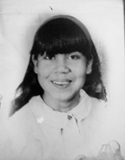
Her name was Jacqueline Davis, but her friends called her Jackie. She was just 13 years old when she vanished on April 12, 1969, in Cherokee, North Carolina.
That spring day, Jackie was seen walking toward a friend’s house. It should have been an ordinary moment in a young girl’s life—one of countless walks between neighbors in a small community. But she never arrived. She never came home. And she has never been seen again.
Jackie was a citizen of the Eastern Band of Cherokee Indians, a community all too familiar with silence when one of their daughters goes missing. At the time of her disappearance, she stood between 5’0” and 5’5”, with black hair, brown eyes, and a scar above one eyebrow from a run-in with a barbed wire fence. These are the details preserved in the case file, the fragments of a life cut short in public memory.
There are no known dental records, fingerprints, or DNA profiles on file for Jackie. There are no detailed notes about what she was wearing that day, or what she might have carried with her. Instead, there is only absence, stretching across more than half a century.
Her case falls under the jurisdiction of the Bureau of Indian Affairs, District VI – Nashville, but like so many Indigenous cases, it has languished with little public awareness.
When a child goes missing, time should not erase them. But for Jackie, time has stolen more than her presence—it has stolen her visibility. Cases like hers remind me why I write. Because every missing child deserves more than a line in a report. They deserve a voice, and they deserve to be remembered.
Jacqueline “Jackie” Davis was 13 years old, full of life and possibility, when she disappeared in 1969. Over five decades later, her name deserves to be spoken again.