The Woman in the Trunk
I have spent years writing about the forgotten — women whose lives have quietly vanished into dusty police boxes, mislabeled reports, and unanswered phone calls. Women whose families have been left grieving in silence, whose names have slipped between the cracks of public memory. I’ve exposed failures and demanded accountability, but nothing prepared me for the case of Catherine Diane “Catrina” Mowrey. Her story didn’t arrive neatly packaged. It came in fragments — a redacted police report, a grainy scan from 1985, a burial record, a newspaper clipping yellowed by time, and an internal memo from the Dallas City Attorney that quietly admitted, decades later, that her case was still “open and pending.” A case publicly dismissed as an overdose in the 1980s turned out to be something far darker, and buried inside the records Dallas tried to keep hidden is a truth the city has never wanted to face: Catherine did not simply overdose. She was placed — wrapped — into the trunk of a car and abandoned in a Dallas alley. Someone put her there. And the Dallas Police Department knew it.
On June 25, 1985, officers were dispatched to an alley behind a South Oak Cliff apartment complex after complaints of a smell — the unmistakable odor of human decomposition. Inside the trunk of a car, wrapped in a sheet, badly decomposed, lay the remains of a young woman. The official police report described it with cold detachment: the body “appeared to be that of a white female” and was “badly decomposed.” She was unrecognizable. No name. No visible identity. Just a body someone wanted hidden long enough for decomposition to erase the evidence. But decomposition only conceals so much.
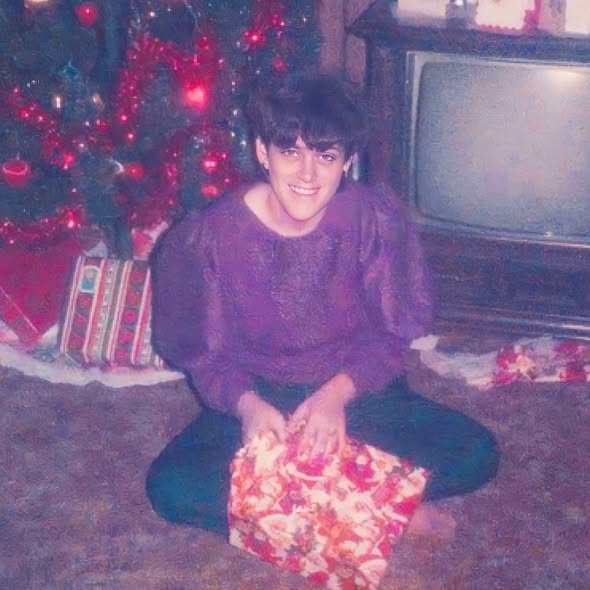
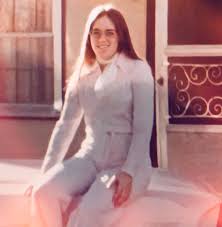
Despite the advanced state of her remains, the Medical Examiner’s office was able to identify her through fingerprints — one of the few things time had not erased. Her name was Catherine Diane Mowrey. She was just 24 years old. She had lived a life marked by both struggle and resilience. Only months earlier, she’d survived a horrific car crash in Kansas City, where she was thrown from a vehicle and left in the snow. A police helicopter found her after she waved for help — battered, freezing, barely conscious, but alive. That was who Catherine was: a survivor.
But in Dallas, she didn’t survive. And the story handed to the public never matched the evidence. The day after her body was found, the Dallas Morning News printed a headline announcing she’d died of an overdose. Dallas homicide Sgt. H.M. Rice, speaking to the press, said, “She died on somebody and they just got scared and put her in the trunk.” Then, almost unbelievably, he added that it wouldn’t be classified as murder because “we don’t know who put her there.” Before toxicology, before an autopsy, before any investigation had occurred, Dallas Police declared Catherine’s death an overdose and closed the book. It was a narrative that relieved the city of responsibility, quieted public concern, and let someone walk away with no questions asked.
But the truth was sitting in the very documents Dallas hoped no one would ever read. It took nearly four decades for that truth to surface. One of the documents obtained through a hard-fought open records battle — a letter from the Dallas City Attorney to the Texas Attorney General — revealed what the public never knew: Catherine’s case was still considered an “open pending case.” The same police department that told the newspaper the case was not a murder had privately acknowledged to the state that releasing the documents could “hinder the Dallas District Attorney’s efforts to prosecute this matter.” They had kept her case open, quietly, for 38 years. And yet they never told Catherine’s family.
To understand what happened to Catherine, we have to revisit her final days — days that Dallas Police never bothered to trace. Catherine had left Kansas for reasons unclear to her loved ones. Dallas in the 1980s was a city of opportunity and violence, neon lights and lurking danger. She didn’t simply appear in South Oak Cliff without knowing someone there. Someone gave her a place to stay, a ride, or a place to visit. Someone knew where she was. Someone saw her last.
What we know from the forensic evidence is that Catherine died several days before she was found. By the time officers opened the trunk, her body was so decomposed it was unrecognizable. Decomposition in the Texas heat progresses rapidly, especially in enclosed environments like a car trunk. The apartment manager told officers the car had been parked there since Saturday night. Catherine was discovered on Tuesday. That means her body decomposed for at least three to five days. But the most telling detail is not the decomposition — it’s the sheet.
People don’t wrap overdose victims in sheets. They don’t move them in cars. They don’t drive them to apartment complexes and abandon them. They don’t hide them in trunks, close the lid, and walk away. Wrapping a body takes time, space, and intent. It is the act of someone who needs to conceal a death. And concealment is not panic — it is purpose. The sheet was a barrier, a tool to move her, a way to protect the person transporting her from fluids. The trunk was chosen for its darkness and its promise of delay. Whoever did this knew exactly what they were doing.
The Dallas Police Department knew all of this. The report itself says her body was moved after death. Sgt. Rice said it publicly. Yet they never treated it as a homicide. They didn’t preserve the vehicle, didn’t dust it for prints, didn’t canvass the apartment complex thoroughly, didn’t trace the car’s owner, didn’t interview neighbors, and didn’t wait for toxicology before declaring cause of death. They simply dismissed Catherine’s life with a single word: overdose.
But overdose victims are not wrapped. Overdose victims are not transported. Overdose victims are not hidden. When someone overdoses, friends panic, yes — but they call for help. They don’t stage a disposal. They don’t risk being seen. They don’t return to the scene twice — once to move the body, once to abandon it — unless something else happened. And that “something else” is what Dallas refused to investigate.
It’s impossible to ignore the sheer volume of evidence Dallas excluded. The location of the body. The timeline of the vehicle. The witness statements. The decomposition. The wrapping. The trunk. The abandonment. All of this points not to overdose, but to fear — someone else’s fear. Someone who didn’t want Catherine’s body found. Someone who thought decomposition would erase the truth. Someone Dallas either didn’t want to pursue or knew they couldn’t.
Everything changes when you view the case through modern forensic interpretation. Wrapping equals deliberate concealment. A trunk equals transportation. Decomposition equals a defined timeline. A random vehicle equals a lead. A parking location equals a connection to someone who lived, worked, or felt familiar with the complex. None of this was followed.
But when the Dallas City Attorney wrote to the Attorney General, their words betrayed the truth. They referenced third-party harm. They referenced prosecutorial interference. They withheld pages. They marked entire paragraphs as “exempt.” And they admitted, openly, that the release of the documents “would interfere with an active investigation.” That statement is the closest thing to a confession Catherine has ever received.
In truth, the suspect pool is small. Someone had access to Catherine. Someone had access to the vehicle. Someone had knowledge of the apartment complex. Someone wrapped her body. Someone parked the car behind that building on Saturday night. Someone walked away and waited for decomposition to do its work. Someone believed the overdose narrative would protect them — and for decades, it did.
Reconstructing Catherine’s final hours, based on timeline and decomposition, suggests she died between Thursday and Saturday. She was then wrapped, placed in a vehicle, and driven to South Oak Cliff after dark. Her body remained in the trunk until Tuesday. This would have given the perpetrator days to distance themselves, dispose of evidence, and adjust their story. But their actions — not their excuses — speak volumes. People who are innocent don’t hide bodies.
Catherine’s case forces us to confront the uncomfortable truth of how easily a woman can disappear in a major American city — not into thin air, but into bureaucratic apathy. She was a young woman who moved to Dallas searching for possibility. Instead, she crossed paths with someone who saw her as disposable. And when her life ended, the city entrusted with protecting her chose convenience over justice. They denied her dignity in death. They denied her family the truth. They let her killer walk away.
But Catherine’s story is not over. It cannot be over. She deserves her name spoken, her truth exposed, her case reopened, and her memory restored. She deserves a city willing to admit it failed her. She deserves a public willing to demand accountability. She deserves justice that has been denied for 38 years.
This is my commitment: to tell her story, to expose the contradictions, to demand the release of the full unredacted file, and to give Catherine back the voice Dallas took from her. She survived being thrown from a car. She survived against odds most people never face. She deserved a chance at life in Dallas. She deserved safety. She deserved justice.
Instead, she ended up in the trunk of a car.
But she will not stay there. Not anymore. Not while her truth is finally being told.
If you are reading this, I’m asking you to help me demand what Catherine never received: answers. Ask the Dallas County District Attorney why this case is still open. Ask the Dallas Police Department why they didn’t treat her discovery as homicide. Ask why they kept her file hidden. Ask why they allowed the overdose narrative to live unchecked for nearly four decades. Ask whose identity is being protected in the redactions. Ask why they believe releasing the file would harm a “pending prosecution” after all these years.
Catherine deserves these questions. And she deserves someone willing to keep asking them.
Her life mattered. Her story matters. And this is not the end — this is the beginning of the fight she has deserved since 1985.