Vanished Without a Trace
An Oklahoma mother lost, a haunting silence, and the urgent fight for justice for Indigenous women
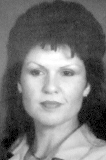
On a summer day in 1999, 42-year-old Sherryl Lynn Jacquot disappeared from Stilwell, Oklahoma—and was never seen again. More than two decades later, her story remains one of countless unsolved cases that haunt the state’s Indigenous communities.
Sherryl was last heard from on July 3, 1999, when she called her mother from an unknown number in Fort Smith, Arkansas. She promised to drive to Oklahoma City to repay borrowed money. But she never arrived—and from that moment on, her voice was lost to time.
Just a week earlier, Sherryl had visited her mother’s home in Oklahoma City to borrow some cash. Her family immediately noticed she was hurt—a deep cut on her back, another on her right foot. When they urged her to go to the hospital, she brushed them off. She said she’d fallen into a glass-topped table during a fight with her boyfriend.
That was the last time her mother and sister saw her.
Sherryl lived in a trailer along Highway 100 in Stilwell, a small Adair County town where people know each other’s names but secrets run deep. When family members later went looking for her, they found the trailer abandoned and her dogs—thin and unfed—still there, waiting. Her small off-white Datsun pickup had also vanished, and to this day, it has never been found.
At the time of her disappearance, Sherryl was part of a rough crowd known for drug activity and had been trapped in an abusive relationship. Those close to her believe she may have tried to leave—but never got the chance.
Sherryl was Native American, described as 5’5” to 5’8”, with brown eyes and black hair that sometimes had red or brown highlights. She was known for her love of western-style jeans, white sneakers, and cowgirl boots. Her tattoos—a Harley design on her left forearm and Harley wings on her right hip—were badges of a woman who loved freedom but couldn’t quite find it.
When her family finally reported her missing in early 2000, police found few leads and even fewer answers. Despite clear signs of danger and the violent relationship she had been trying to escape, Sherryl’s case—like too many others—faded quietly into the background.
Oklahoma has one of the highest numbers of Missing and Murdered Indigenous People (MMIP) in the United States, ranking second nationwide. In 2024, 86 Indigenous cases were reported in the state—part of the 840 cases across the country.
This crisis is fueled by familiar and painful patterns: domestic violence, drug trafficking, poverty, jurisdictional confusion, and mistrust between communities and law enforcement.
- Many cases fall into gray areas of tribal, state, and federal jurisdiction, delaying investigations.
- Some families hesitate to report disappearances at all—traumatized by generations of neglect or labeling of victims as “runaways.”
To address this, Oklahoma passed Ida’s Law in 2021, named for Ida Beard, a Cheyenne and Arapaho woman who disappeared in 2015. The law funds a specialized investigative unit for MMIP cases and works alongside the Bureau of Indian Affairs’ Missing and Murdered Unit and the Oklahoma State Bureau of Investigation’s Cold Case Section.
But for families like Sherryl’s, laws alone aren’t enough. They want resolution. They want to know what happened. They want to bring her home.
Sherryl Lynn Jacquot’s story is one of loss, silence, and resilience—echoing through time and across families still waiting for justice. Her case remains unsolved, but her name deserves to be spoken, her face remembered, and her life honored.
If you have any information about the disappearance of Sherryl Lynn Jacquot, please contact the Oklahoma State Bureau of Investigation or the BIA’s Missing and Murdered Unit.
Because every cold case deserves warmth.
And every missing woman deserves to be found.