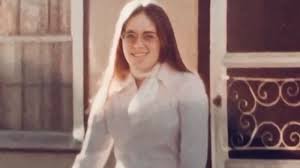
Wrapped in Silence
A Dallas woman’s mysterious end, a family’s decades of grief, and questions that never faded
On February 5, 1961, James and Catherine Mowrey welcomed their daughter Catherine Diane into the world. The youngest of six, she grew up in Kansas alongside her siblings Jim, Michael, Mark, Joann, and Deborah.
By the time she reached adulthood, Catherine had adopted a new name: Catrina. The story goes that while working at a country club, the women she waited on kept calling her by that name — and eventually, it stuck.
At 24, Catrina had built a life of her own in Dallas, Texas. She had left Kansas at 18, chasing independence, but by 1985 she was loosely tied to the local drug scene. Despite that, she was still close to her family, planning visits back home, and keeping her sisters in the loop.
The Phone Call That Lingers
In mid-June 1985, Catrina phoned her sister Deborah with plans to visit. The conversation turned into an argument, ending abruptly when Deborah hung up. Deborah assumed they’d make peace when Catrina arrived in Kansas — but that reunion never came.
Days passed, then weeks, with no word from Catrina. Deborah chalked it up to lingering hurt feelings. But on June 25, 1985, everything changed.
A Body in the Trunk
That day, a manager at the Casa III apartments on South Marsalis Avenue noticed a foul smell coming from a parked 1978 Ford LTD. When police pried open the trunk, they made a grim discovery: the nude, decomposing body of a young woman wrapped in a stained bedsheet.
Dental records confirmed the victim was Catrina Mowrey. The medical examiner found no drugs or alcohol in her system. There were no obvious signs of sexual assault. And while decomposition obscured many details, the circumstances of her death raised more questions than answers.
At first, police leaned toward suicide or an overdose. Her official manner of death would ultimately be listed as “unexplained.”
Clues That Never Fit
Investigators searched Catrina’s apartment. Her glasses and contacts — both essential, since she was legally blind without them — were still on her nightstand. Packed travel bags sat by the door, ready for her trip to Kansas.
The car where she was found belonged to her boyfriend. He claimed he thought she’d already left town, had an alibi for the weekend, and said it wasn’t unusual for her to borrow his car.
The last confirmed sighting came from a man nicknamed “PeeWee.” He was a close friend, rumored to be infatuated with Catrina. He was also tied to drugs. Deborah always believed he knew more than he admitted. Authorities, however, never located him.
A Case Left to Dust
From the beginning, Catrina’s family felt her case wasn’t taken seriously. Police seemed dismissive, possibly because of her ties to drugs. For years, her relatives were told vague reassurances that the case was being worked — only to later discover little had been done at all.
Her niece, Catrina Marshall, has spent years trying to push the case forward. She describes hitting wall after wall: being told files were missing, records incomplete, even being accused of repeating “family stories” instead of facts.
In 2021, she launched a petition urging Dallas Police to reexamine the case, writing in frustration:
“After numerous attempts to contact, communicate, request information, give information and investigating this case on my own with minimal to no response … I’m now forced to make this matter public in hopes of gaining the attention of higher courts/officials to assist with getting some answers, justice and most importantly – closure.”
A Family Shattered
The toll on Catrina’s family has been devastating. Both parents died without answers. Sister Joann was murdered in Dallas in 1993. Sister Deborah, haunted by the loss of Catrina and the years of silence, died by suicide in 2020.
Her niece continues to carry the torch, fighting not only for answers, but for the dignity Catrina was denied.
What Happened to Catrina?
Two theories persist:
- Foul play — Someone killed Catrina, wrapped her in a sheet, and left her in the trunk of a car across town. Suicide simply doesn’t fit.
- An accidental overdose cover-up — That she overdosed while with others, who panicked and tried to conceal her body. Yet, toxicology showed no trace of drugs or alcohol.
Both scenarios point toward one conclusion: Catrina didn’t put herself in that trunk.
Still Waiting for Justice
Nearly forty years have passed since Catrina’s body was found in that alley. For her family, the pain never faded. What remains is silence — from investigators, from witnesses, from a city that never gave her case the attention it deserved.
If you know anything about the death of Catrina Mowrey, please contact the Dallas Police Homicide Unit at 214-671-3661, General Investigations at 214-671-3503, or reach out directly to her niece on Twitter at @catrinamarsh91.
Because justice delayed is justice denied — and Catrina’s story deserves more than a line in a forgotten file.